Lands End
Lands End: transformed from a place of shipwrecks and Victorian-era amusements, to a derelict urban jungle, to a wonderland of trails, overlooks and a state-of-the-art national park visitors center.
After decades of enjoyment by the public, Sutro Baths, Playland at the Beach and rail lines to Lands End were abandoned. The area fell into neglect with unsightly building debris and overgrown trails. In the 1980’s the National Park Service purchased the property with the intent to establish a universal welcome post on the dramatic westernmost edge of the city.
In 1993 a vision for the site was produced. The vision included a visitor center perched on top of the Lands End Bluff overlooking the ruins of Sutro Baths and the Pacific Ocean and a network of accessible trails along this key segment of the California Coastal Trail. The plan sat on a shelf for over ten years before public interest and funding were secured. The challenge remained to achieve buy-in from a wide range of local constituent groups. Before design as even started, park and conservancy staff were meeting with neighbors and local committees to seek input and advice. Face-to-face public engagement enabled a complex project to move forward with success.
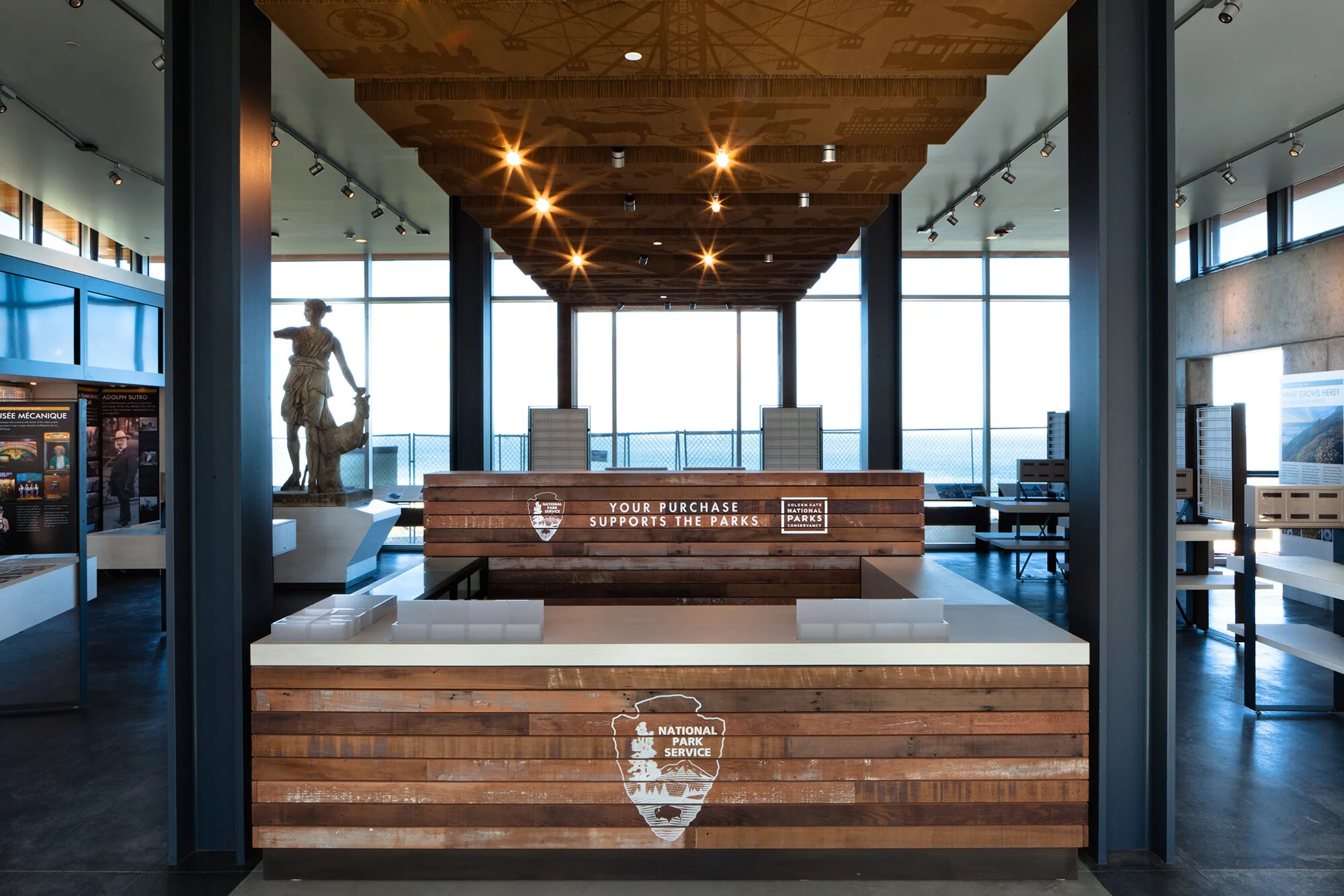
The result: the Lands End Lookout, a visitor center, park-themed bookstore, and café serving thousands of visitors and locals annually. Designed by EHDD, it is a LEED Platinum building known for its sustainable features, panoramic views of Sutro Baths, and as a starting point for coastal trails.
The San Francisco Chronicle named the Lookout the Public Building of the Year in 2012 and one of the Best Buildings of the Decade in 2019. In 2024, the Chronicle included the Lookout in a list of 11 buildings that tell the story of 21st Century San Francisco. John King, Chronicle Urban Design Critic, wrote:
“One my favorite 21st century additions to San Francisco is this tough jewel of concrete and glass perched on a rocky bluff above the Pacific Ocean. The thick materiality withstands buffeting by moist salty winds; it’s also the starting point for a network of green swathed trails like no other, ocean to the west and the Golden Gate to the east. That latter detail, not just the ruggedly right design, is why the 4,150-square-foot building conceived by the National Park Service and the Golden Gate National Parks Conservancy shares this list with vastly larger structures. The attractions that continue to set this city apart aren’t all concentrated east of Van Ness Avenue, and a heartening trend of the past 25 years is that public agencies and private donors have stepped up to show and signal that their appeal isn’t simply nostalgia, but a mix of sensations that will continue to shine in the decades ahead.”